Top 9 Benefits of Standing Desks: Why It Supports Health

Discover the top 9 health benefits of standing desks and learn how they can improve your posture, reduce back pain, and boost productivity as you work.
Table of Contents
Standing desks have gotten seriously popular over the last few years. Chances are you’ve heard someone around you rave about the difference, feeling more awake, staying focused longer, and dealing with less of that end of day back ache. Those are the standing desk benefits people bring up most often, and they are a big part of why the benefits of standing desk setups keep getting shared everywhere. And after work, once you start scrolling, standing desk ads seem to follow you everywhere. At some point, it’s hard not to wonder: is a standing desk really that helpful, or is it just another trend?
Either way, the bigger issue is still the same, sitting for long stretches can take a toll. In this article, we’ll go through nine potential benefits of using a standing desk and walk you through practical ways to use it well, so the experience feels smoother and the results are more likely to stick.
What is a Standing Desk?

Photo by TheStandingDesk on Unsplash
A standing desk (also called a sit-stand desk or a height-adjustable desk) is a desk with an adjustable height. It uses a motorized lifting system inside the legs to raise or lower the desktop, making it easy to fit users of different heights.
Beyond switching between sitting and standing to help reduce the risks of prolonged sitting, a standing desk can also improve posture issues caused by a desk that’s simply set at the wrong height. It’s especially useful in shared spaces, since the desk can be quickly adjusted to match each person’s preferred working height.
Today, many electric standing desks also come with optional add-ons like headphone hooks, cup holders, and under-desk PC mounts, so users can tailor the setup to their needs.
9 Health Benefits of Standing Desks

More and more people are choosing standing desks at work because of the health benefits they can offer. Switching positions regularly gives you a more flexible way to work, and it can support better long-term comfort and wellbeing. Below are a few ways a height-adjustable desk may help your health.
1.Reduce the Back and Neck Pain

Image by Freepik
Standing desks are getting more attention for one practical reason: they can help ease the back and neck discomfort that often comes with a desk job. Sitting for long stretches puts extra load on the lower back, which can build into persistent pain over time. On top of that, when a monitor sits too low or too far away, people tend to crane their necks or tilt their heads forward, and that posture can easily lead to neck strain.
By encouraging more movement throughout the day, a standing desk offers a simple ergonomic fix. Switching between sitting and standing helps break up the constant pressure on the back, neck, and shoulders, which supports better spinal health instead of locking the body into one position for hours.
One study highlighted how noticeable the changes can be. After just four weeks of using standing desks, participants reported a 32% reduction in lower back pain and a 54% reduction in upper back and neck pain. The same research also noted that when people stopped using the standing desks, the pain relief tended to fade, which points to the value of making sit-stand habits a regular part of the workday. Beyond pain relief, standing desks can also support better posture and may help lower the risk of disc-related strain and shoulder tension. In other words, adding a standing desk to your routine can make a real difference in how your body feels in a sedentary work environment, and it can contribute to better overall well-being.
2. Improve Circulation

Photo by TheStandingDesk on Unsplash
When you sit for long periods, your leg muscles barely contract. That reduced muscle activity can slow venous return, so blood is more likely to pool in the lower legs. A standing desk helps by encouraging a more active working posture, which can indirectly reduce that lower-limb “stagnation.”
Standing activates the muscles in your calves and thighs, and those contractions act like a pump that helps move blood back toward the heart. Over time, standing more regularly can also support balance and core engagement, which often means you’re subtly shifting weight and stabilizing, small movements that further support circulation.
It’s worth adding one important detail: standing still for hours isn’t the goal. The biggest benefits come from changing positions and moving often. While using a standing desk, working in a few easy micro-movements, light stretches, a short walk to refill water, a few heel raises, or simply alternating between sitting and standing can keep blood flowing and help lower the risk factors associated with prolonged immobility. In that sense, a standing desk can be a practical way to build healthier movement habits into your day and reduce some of the risks that come with too much sitting.
3. Burn More Calories: Lowering Risks of Weight Gain and Obesity

Photo by Onur Binay on Unsplash
A standing desk can be a practical way to reduce gradual weight gain, mainly because it helps you spend more of the day on your feet and nudges your daily energy burn upward. Dedicated exercise is still the most efficient way to burn calories, but many people struggle to carve out a solid workout block. A sit-stand desk lowers that barrier by letting you stand while you work, or by turning small pockets of time into extra movement without needing a separate “workout session.”
(Learn more: How Many Calories Does Standing Burn vs Sitting?)
Standing also tends to shape a healthier rhythm during the day. When you’re already upright, it’s easier to take a quick walk, stretch for a minute, or do a bit of light movement during breaks. Over time, those low-intensity activities add up and can help with weight management compared with staying seated for most of the day.
The key is to treat the numbers as estimates, because calorie burn varies with body weight, standing time, and how much you move while standing. As a rough example, replacing a couple of hours of sitting with standing and light shifting can add up to around 100–200 extra calories in a day for many adults. If that becomes a regular habit, it can translate into several hundred to around a thousand additional calories over the course of a week. From a workplace perspective, introducing standing desks can be a realistic strategy to encourage steady, moderate activity throughout the day, which helps reduce the conditions that make weight gain more likely.
4. Lower Blood Sugar Level

Image by Freepik
Using a standing desk can support healthier blood sugar control, especially after meals. Big post-meal spikes can force the pancreas to work harder to release insulin. When that pattern repeats over time, it may contribute to reduced insulin sensitivity.
One study found that standing for three hours after lunch reduced the size of the post-meal blood-glucose spike by 43%. The window from about 30 minutes to 2 hours after eating is often the most impactful time to act. Even a short 2–15 minute walk, or a bit of light activity after a meal, brisk walking, a few squats, gentle stretching can help move glucose from the bloodstream into your muscles’ cells, where it can be used for energy. A sit-stand desk makes this easier to build into your routine because you can stand up and move without “leaving work mode.” (Learn more: 10 Standing Desk Exercises to Increase Your Energy Level)
There’s also evidence that breaking up sitting time matters across the workday. Alternating between sitting and standing every 30 minutes has been associated with an average 11% reduction in blood-glucose peaks. Since prolonged sitting is linked with a higher risk of type 2 diabetes, building a sit-stand rhythm, particularly after meals, can be a simple, realistic way to keep your blood sugar in a healthier range.
5. Reduce the Risk of Heart Disease
Would you expect that simply spending more of your workday on your feet could influence heart-disease risk? Research on this idea goes back to the 1950s. A landmark 1953 study of London transport workers found that bus conductors, who were up and moving throughout their shifts had notably lower rates of coronary heart disease than bus drivers, whose work kept them seated for long periods.
Since then, a large body of research has continued to sharpen the same takeaway: long, uninterrupted sitting is linked with higher cardiovascular risk. Some observational studies have reported that adults who spend much more time sitting (for example, several hours a day of prolonged TV sitting) show substantially higher rates of cardiovascular events, such as angina and heart attack, compared with those who sit less.
Exercise helps, but it doesn’t automatically erase the downsides of being sedentary for most of your waking hours. Recent research has found that higher sedentary time is associated with higher cardiovascular risk even among people who otherwise meet recommended activity levels.
One important nuance: “more standing” works best when it leads to more movement. Standing perfectly still for long stretches is still a form of being stationary, and some data suggest it may bring its own circulation-related downsides if it becomes excessive. In practice, the most heart-friendly approach is to use standing as a cue to change positions often and add light movement breaks through the day.
6. Reduced Risk of Chronic Diseases
Long stretches of sitting are linked with higher risks of heart disease, certain cancers, and diabetes—conditions that can shorten life expectancy. You’ve probably heard the line that “an hour of sitting is about as harmful as smoking two cigarettes.” That comparison is a simplified way to make the point, and it’s often traced back to a University of Queensland–led analysis: on average, each additional hour of TV watched after age 25 was associated with about 21.8 minutes of reduced life expectancy.
A standing desk helps by cutting down the amount of time you spend sitting, especially if it encourages you to change positions and move more often throughout the day. Evidence from the American Cancer Society’s large cohort research also shows how sitting time and low activity can stack together: compared with people who sat the least and were the most physically active, those who sat more and were less active had a 94% higher risk of death in women and a 48% higher risk in men during the follow-up period.
7. Enhance Mood and Focus

Image by Freepik
Spending long hours seated can nudge your body into a low-gear state: circulation slows, your muscles stay “off,” and it’s easier to feel sluggish or mentally flat. A sit-stand desk helps mainly by breaking that pattern. When you change posture and add tiny bits of movement, walking to refill water, doing a quick stretch, even just shifting your weight, you give your body regular “wake-up” signals that can translate into better mood and steadier focus.
A 7-week workplace project published by the CDC reported that people using sit-stand setups showed improvements in multiple mood-related measures, including lower fatigue and higher vigor. After the sit-stand devices were removed, some of those gains (such as vigor and overall mood disturbance) drifted back toward baseline. In the same project, 87% of participants said they felt more energized, and many also reported feeling more focused and more productive.
Texas A&M researchers saw a similar theme in a call-center study that tracked employees for six months. Workers with stand-capable workstations were about 46% more productive than those at traditional seated desks, measured by successful calls completed per hour. The report also noted that the standing-desk group sat about 1.6 hours less per day, and the productivity gap became clearer after people had time to get used to the new setup.
These findings also fit a broader body of research linking heavier sedentary time with poorer mental health outcomes, including higher odds of depressive symptoms in some studies. In real life, the “sweet spot” usually isn’t standing all day; it’s rotating between sitting and standing, and letting standing naturally invite a bit more movement and comfort through the day.
8. Boost Productivity

Photo by Sable Flow on Unsplash
Research suggests that sit-stand desks can support productivity, and they don’t seem to disrupt the basic tasks people worry about most, like typing. In other words, standing doesn’t automatically make you slower or less accurate at the keyboard.
One study of 60 younger office workers found that using a standing desk for about four hours a day did not significantly change typing output (characters per minute) or error rates. The takeaway is reassuring: for most people, switching to a sit-stand setup can be a fairly smooth transition, without compromising day-to-day performance.
Where standing desks may help even more is indirectly. Standing and breaking up long sitting bouts can improve how people feel during the workday, more alert, less drained, and generally more comfortable. When employees aren’t constantly dealing with back, neck, or shoulder discomfort, it’s simply easier to stay focused. Better comfort and higher energy tend to show up as better work quality and steadier productivity over the course of the day.
9. Improve Posture
A lot of desks simply aren’t set up for the person using them. When the desk height doesn’t match your body, you end up working in a compromised posture, shoulders creeping up, wrists bending, head drifting forward. Over time, that extra strain lands in the wrong places and often shows up as lower-back and neck pain.
A sit-stand desk makes it easy to adjust the desktop height to fit you. (Learn More: The Proper Height for a Standing Desk: A Comprehensive Guide) When the desk is set correctly, it’s much easier to keep your arms and wrists in a neutral, ergonomic position. For standing work, aiming for roughly a 90–100° elbow angle, with your shoulders relaxed and your wrists straight can reduce wrist fatigue and help typing feel smoother.
Just as importantly, alternating between sitting and standing helps you avoid loading the same joints and spinal segments for hours. Changing positions gives your spine a chance to “reset,” keeping it supported and reducing the constant pressure that builds up when you stay in one posture too long.
5 Tips to Use Standing Desks Correctly

Photo by ergonofis on Unsplash
Standing desks are a fantastic tool for improving your health and productivity, but using them correctly is key to reaping their full benefits. Here are five essential tips to help you maximize the advantages of your standing desk while maintaining comfort and efficiency throughout your workday.
1. Alternate Between Sitting and Standing
It's crucial to adopt a balanced approach of alternating between sitting and standing throughout your workday to maximize the benefits of a standing desk while minimizing potential health risks.
Finding the Right Balance: Research indicates that both prolonged sitting and standing can have adverse effects on health. To combat this, aim for a ratio of approximately 1:1 or 2:1 between sitting and standing. This means for every hour you spend sitting, dedicate about an hour to standing. Alternating between these positions every 30 to 60 minutes helps prevent muscle stiffness, reduces the risk of lower back pain associated with prolonged sitting, and alleviates the strain on leg muscles and joints caused by extended standing periods.
Enhancing Comfort and Productivity: Implementing a structured schedule of sitting and standing breaks not only promotes physical well-being but also enhances productivity. By keeping your body active and blood circulation flowing, you can sustain higher energy levels and focus throughout the day. Moreover, maintaining a balanced posture while standing and utilizing ergonomic principles ensures optimal comfort and reduces the likelihood of musculoskeletal discomfort.
Effective Implementation: Start by setting reminders or using timers to prompt regular transitions between sitting and standing. Begin with shorter intervals of standing if you're new to the practice, gradually increasing the duration as your body adjusts. By incorporating these alternating routines into your daily workflow, you can experience improved health outcomes and heightened productivity levels, making the most of your standing desk investment.
By adopting a strategic approach to alternating between sitting and standing, you can optimize your work environment for both health and productivity, ensuring sustained comfort and well-being throughout your workday.
2. Adjust Your Desk Height and Position Your Screen for Ergonomic Viewing
Setting your standing desk to the correct height is essential for maintaining comfort and reducing the risk of strain or injury during prolonged work hours. Begin by ensuring your desk allows ample space for your legs and feet without obstruction. If the desk is too low and cannot be adjusted, elevate it using sturdy boards or blocks under the legs. Conversely, if it's too high and fixed, adjust your chair height accordingly or use a footrest to support your feet.
For optimal ergonomics, set your standing desk height so that your elbows form a 90-degree angle when typing, typically around 44 inches (111 cm) for an average-height individual. This positioning helps maintain a natural posture and reduces strain on your wrists and shoulders. If adjusting the desk height alone isn’t enough, consider adding a keyboard tray or using desk risers to achieve the ideal ergonomic setup.
Equally important is positioning your monitor correctly to prevent eye strain and maintain good posture. Place your screen between 20 to 40 inches (51–101 cm) away from your face, ensuring the top of the screen is at or slightly below eye level with a tilt of 10 to 20 degrees upwards. Avoid excessive tilting or placing the monitor too high, which can strain your neck and back.

By adhering to these guidelines and making necessary adjustments, you can optimize your standing desk setup for comfort, productivity, and long-term health benefits. Taking proactive steps to adjust both desk height and monitor positioning enhances your overall work experience while minimizing the risk of ergonomic-related discomfort.
3. Move the Mouse and Keyboard Position
When using a standing desk, it's crucial to align your mouse and keyboard at the same level to maintain a straight wrist posture while typing. Position your keyboard at elbow level or slightly below to keep your wrists relaxed and straight. Place your mouse beside the keyboard to ensure your wrist stays in line with your forearm, minimizing discomfort and preventing strain. Consider using an adjustable keyboard tray and a gel mouse pad for optimal support and comfort during extended computer use. These adjustments promote ergonomic alignment, reducing the risk of repetitive strain injuries and enhancing overall productivity.
4. Buy an Anti-fatigue Mat
Consider investing in an anti-fatigue mat to alleviate the discomfort and fatigue that often accompanies prolonged standing. These mats are designed to cushion and support your feet, encouraging subtle movements that improve circulation and reduce strain on leg muscles. Studies indicate that using anti-fatigue mats can significantly decrease feelings of tiredness and discomfort, particularly for individuals who stand for extended periods each day. By providing a more cushioned surface than hard floors, these mats also contribute to relieving lower back pain associated with prolonged standing. Whether you work in a retail setting, at a standing desk, or in a workshop environment, incorporating an anti-fatigue mat can enhance your comfort and productivity throughout the day.
5. Take a Break Frequently
Using a standing desk and incorporating frequent breaks is essential to optimize your productivity and well-being. While standing desks alleviate some of the health risks associated with prolonged sitting, such as back discomfort and muscular tension, taking periodic breaks to move and stretch remains crucial. Research indicates that call center employees, for instance, experienced reduced upper limb and back discomfort after implementing break reminders into their work routines.
Consider setting up reminder software on your computer or using a break reminder app on your phone to prompt you to take breaks throughout the day. These breaks not only provide physical relief but also allow you to clear your mind and rest your eyes, enhancing overall focus and productivity. Whether it's a short stroll away from your desk or simple standing desk exercises, incorporating regular breaks into your workday can significantly contribute to your health and performance.
Elevate Your Workspace with Dezctop’s Standing Desks
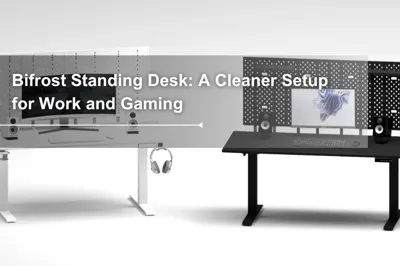
The benefits of standing desks are vast and varied, from reducing the risk of chronic diseases to boosting productivity and creativity. Dezctop’s Bifrost Series revolutionizes ergonomic workspaces, setting new standards for health and productivity. Designed with advanced statics, numerical analysis methods, and customizable D-Board accessories, these desks cater to photographers, gamers, and office workers alike.
The Bifrost Elite desk offers seamless electric height adjustment, anti-pinch technology, and formaldehyde-free tabletops for a safe, flexible, and healthy work environment. Its built-in cable management system keeps your workspace clean and organized, while the visual LED display panel allows for easy height adjustments. Experience the difference with Dezctop and elevate your health and productivity today. Explore the Bifrost Series and transform your workspace.

Ready to transform your workday and enhance your health? Discover the Bifrost Series & Revon Series today and build the perfect workspace tailored to your lifestyle. Explore Now!
Tag




Dezctop